
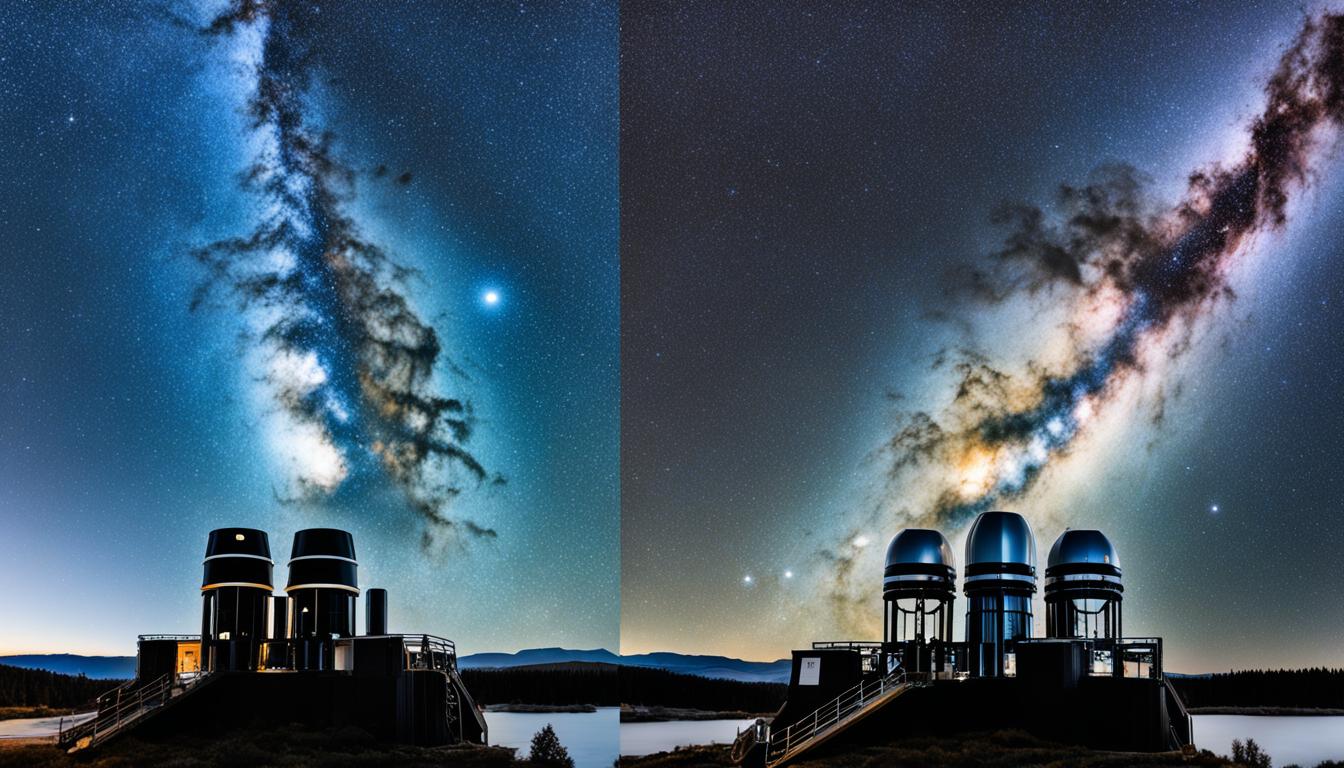
As a passionate astrophotographer, I’ve often wondered: what makes electronic-assisted astrophotography (EAA) different from traditional methods? Is there more to this new approach than meets the eye? In this article, we’ll explore the key differences between EAA and traditional techniques. We’ll see how these methods capture the cosmos.
Key Takeaways
- Astrophotography has evolved from early methods to sophisticated techniques for capturing the night sky.
- Electronic-assisted astrophotography (EAA) offers new advantages, like increased sensitivity and reduced noise.
- Knowing the differences between EAA and traditional methods helps you choose the best approach for you.
- Astrophotography, whether traditional or electronic-assisted, needs careful planning, special equipment, and a keen eye for composition.
- The future of astrophotography promises exciting developments as new technologies and techniques emerge.
Introduction to Astrophotography
Astrophotography is the art and science of taking pictures of the stars and the night sky. It combines astronomy and photography to capture the beauty of the cosmos. From the first photographers to today’s tech, astrophotography’s history is both rich and fascinating.
What is Astrophotography?
Astrophotography, or night sky photography, is about taking pictures of stars and space. It includes the Milky Way, galaxies, planets, and more. Photographers use special gear and software to show us the universe’s beauty.
The History of Astrophotography
- The story of astrophotography started in the mid-19th century. Early photographers and astronomers used new tech to capture the stars.
- In 1839, Louis Jacques Mandé Daguerre took the first photo of the Moon. This was a big step in astrophotography.
- John William Draper made the first good Moon photo in 1840. This was a key moment in astrophotography.
- As cameras and telescopes got better, astrophotography helped scientists see more stars and nebulae. This was a big change in astronomy.
Today, astrophotography keeps getting better with new cameras and software. More people are taking amazing pictures of the night sky.
Traditional Astrophotography Methods
Capturing the night sky’s wonders has been a key part of traditional astrophotography for years. At its core, long exposure techniques are used to gather lots of light. This reveals the faint objects in space that amaze us.
Long Exposure Techniques
Success in traditional astrophotography comes from exposing the camera to the night sky for a long time. This lets the sensor collect more photons. It makes images of galaxies, nebulae, and other objects brighter and more detailed.
By controlling how long the camera is exposed, photographers balance light gathering with camera tech limits and Earth’s rotation.
Tracking and Guiding
To stop stars from moving in the camera’s view, special mounts are used. These mounts move to track the stars, keeping them still. Guiding systems also help keep the camera focused for sharp images.
Specialized Equipment
- Equatorial or computer-controlled altazimuth telescope mounts
- Guide scopes or off-axis guiders
- Astronomical CCD cameras with cooling systems to reduce thermal noise
- Filters and other accessories designed for astrophotography
Traditional astrophotography is full of special tools and techniques. Each one is vital for capturing the beauty and complexity of space. By using these methods, photographers can make images that inspire wonder and awe.
Emergence of Electronic Assisted Astrophotography (EAA)
In recent years, a new way of taking pictures of the stars has come to light, called Electronic Assisted Astrophotography (EAA). It uses special cameras and advanced computer techniques that are different from old methods. This new way lets photographers take clear pictures of stars and galaxies easily and quickly, with less gear and hassle.
The main idea of EAA is to use electronic sensors and digital processing to improve how we take pictures of the stars. Unlike old methods, EAA doesn’t need long exposure times or special tracking gear. It lets photographers take great pictures fast, even when the sky is not perfect.
EAA is great at making faint light from stars visible, so we can see amazing pictures of the sky that were hard to get before. This technology has changed electronic assisted astrophotography, letting people see and share the beauty of space like never before.
“EAA has revolutionized the way we approach astrophotography, making it more accessible and rewarding for both seasoned veterans and aspiring hobbyists alike.”
The world of EAA is always getting better, with new techniques and tools that let us see the universe in new ways. Things like better camera sensors and improved computer algorithms are making electronic assisted astrophotography even more exciting. The future looks bright for capturing the beauty and complexity of the universe.
Key Differences Between EAA and Traditional Astrophotography
Astrophotographers use two main ways to capture the night sky: traditional and Electronic Assisted Astrophotography (EAA). These methods differ in their technology and processes. They both aim to show the beauty of the stars.
Imaging Sensor Technology
Traditional astrophotography uses DSLR or astronomy cameras. These cameras take long exposures to catch light from far away. They have sensors that work well in low light and reduce noise.
EAA uses special sensors for fast, low-noise performance. This means shorter exposure times and quicker data capture.
Data Acquisition and Processing
The type of sensor used affects how data is gathered and processed. Traditional methods capture many long images, then stack and process them to reduce noise and improve details. EAA uses live stacking and advanced algorithms for high-quality images quickly.
The main differences between EAA and traditional astrophotography are in the imaging sensor technology and data acquisition and processing methods. Knowing these differences helps photographers choose the best method for their goals. This way, they can capture stunning images of the universe.
Advantages of EAA over Traditional Methods
Electronic Assisted Astrophotography (EAA) has many benefits over old ways of taking pictures of the stars. It uses special sensors that make images clearer and show more detail. These sensors help capture faint stars and galaxies. Also, EAA’s advanced processing cuts down on noise and makes pictures look better.
EAA is easier and more welcoming for beginners or those with basic gear. It uses electronic sensors and computers to improve photos. This makes it easier to get great shots without the old challenges of film or manual methods.
Increased Sensitivity and Resolution
EAA’s sensors are super sensitive to faint stars and objects. This means you can see more and get better details. You can see things you couldn’t before. These sensors also make pictures very clear and sharp.
Reduced Noise and Artifacts
Old photos often have unwanted noise and artifacts that mess up the picture. EAA uses special processing and stacking to fix this. This makes the pictures clean and beautiful. It lets you see the beauty of the night sky without distractions.
“EAA has truly revolutionized the way we approach astrophotography, making it more accessible and allowing us to capture the cosmos in greater detail than ever before.”
Challenges and Limitations of EAA
EAA, or electronic assisted astrophotography, has many benefits but also faces some challenges. One big issue is the equipment cost and complexity.
EAA is more expensive than traditional methods using DSLR cameras and lenses. It needs special sensors, advanced software, and complex hardware. This makes it hard for beginners to start.
The Steep Learning Curve
EAA also has a steep learning curve. It takes time to learn about image acquisition, data processing, and special software. This can stop some people from trying EAA, as they prefer simpler methods.
- The high equipment cost of EAA can be a big problem for beginners.
- The complexity of the EAA setup and the steep learning curve can be scary for some.
- EAA often needs more time and resources than traditional methods to get good results.
Despite the challenges and limitations of EAA, its benefits like better sensitivity and less noise make it valuable. With patience, hard work, and the right help, these issues can be overcome. This lets more people enjoy the beauty of the night sky with EAA.
Astrophotography Techniques and Best Practices
To capture amazing astrophotography images, you need to plan well and pay attention to details. Choosing the right spot and framing your shots correctly can greatly improve your photos. This makes your astrophotography stand out.
Planning and Site Selection
Good astrophotography starts with planning. Before you go, check the weather forecast and light pollution levels. Also, track celestial objects to find the best time and place for your photos. A dark location with clear skies will make your images look better.
- Check weather forecasts to anticipate clear skies and favorable conditions
- Analyze light pollution maps to identify the darkest shooting locations
- Plan your shoots to coincide with the movement of your celestial targets
Composition and Framing
Learning how to compose and frame your shots is key. Add things like landscapes or silhouettes to your photos for depth and interest. Make sure your camera is in the best position to show the Milky Way or other stars in a great way.
- Incorporate foreground elements to create a sense of depth and scale
- Experiment with different camera angles and orientations to find the best composition
- Pay attention to the placement and balance of your celestial subjects within the frame
Use the best astrophotography techniques and plan well. Also, have a good eye for composition and framing. This way, you can take amazing photos that show the night sky’s beauty.
“The night sky is a canvas, and astrophotography is the medium to paint it with your unique vision.”
Popular Astrophotography Targets
I love capturing the stars and planets in my camera. From the Milky Way to the Moon, each target is a challenge and a reward. It makes astrophotography exciting and diverse.
The Milky Way
The Milky Way is a favorite among astrophotographers. In summer, its center shines brightly in the sky. I use wide-angle lenses and long shots to capture its beauty.
This shows the stars, nebulae, and dust lanes. It’s a sight that’s hard to forget.
Deep-Sky Objects
Deep-sky objects like galaxies and nebulae are also popular. They need special gear like telescopes to be seen clearly. To capture them, we use tracking and stacking techniques.
This brings out their beauty and details. It’s a way to see the wonders of the universe up close.
Planetary and Lunar Imaging
The Moon and planets are also great for photography. You can use simpler gear like DSLR cameras. They change often, offering many photo opportunities.
This makes them fun to capture. The Moon and planets can be very creative subjects.
| Astrophotography Target | Equipment Needed | Imaging Technique |
|---|---|---|
| Milky Way | Wide-angle lens, DSLR camera | Long exposures, mosaic stitching |
| Deep-Sky Objects | Telescope, dedicated imaging sensor | Tracking, guiding, stacking |
| Planets and Moon | DSLR camera, smaller telescope | Short exposures, image stacking |
Astrophotography is always a thrill for me. Whether it’s the Milky Way, deep-sky objects, or the Moon and planets. Each target has its own challenges and rewards.
This hobby is rewarding and enlightening. It keeps me fascinated by the universe.

Astrophotography Software and Post-Processing
Capturing stunning celestial images is just the start of the astrophotography journey. To truly bring out the best in your astrophotos, you’ll need to use specialized astrophotography software. You’ll also need to learn post-processing techniques. These include image stacking and integration and calibration and color balancing. These steps can make your images look amazing.
Image Stacking and Integration
Image stacking and integration is a key step in post-processing. By combining many exposures, you can reduce noise and boost the signal-to-noise ratio. This makes your images cleaner and more detailed. Tools like DeepSkyStacker, PixInsight, and Photoshop’s Auto-Blend Layers make this easy.
Calibration and Color Balancing
Proper calibration is vital in astrophotography post-processing. Using dark frames, flat frames, and bias frames helps fix sensor issues and improve image quality. Color balancing also ensures celestial objects look right, making your images true to the night sky.
| Astrophotography Software | Key Features |
|---|---|
| DeepSkyStacker | – Image stacking and integration – Supports RAW and FITS formats – Batch processing capabilities |
| PixInsight | – Comprehensive image processing suite – Advanced calibration and color correction tools – Powerful automation and scripting |
| Adobe Photoshop | – Familiar interface for photo editing – Auto-Blend Layers for image stacking – Wide range of adjustment and manipulation tools |
Mastering astrophotography software and post-processing can turn your raw astrophotos into stunning images. These images will capture the true beauty of the night sky.
The Future of Astrophotography
Astrophotography is changing fast, bringing new tech and trends to how we see the stars. We can look forward to better images, easier use, and more access for everyone. This change is exciting for both experts and beginners.
Advancements in Imaging Sensors
New tech in camera sensors is a big deal for astrophotography. These sensors get better at catching details and making images clearer. Soon, we’ll see pictures of stars and planets like never before.
Automated Tracking and Guiding Systems
Tracking and guiding systems are getting smarter and easier to use. This means more people can take great photos of the sky without being experts. It’s making astrophotography available to more folks.
Innovative Post-Processing Tools
Image processing is also getting a boost. New tools will help turn raw photos into stunning images with ease. This will make sharing the beauty of space even more exciting.
The future of astrophotography looks bright with emerging technologies and trends. These changes will open up the universe to more people. It’s an exciting time for exploring the cosmos through photography.
“The future belongs to those who believe in the beauty of their dreams.” – Eleanor Roosevelt
Conclusion
The world of astrophotography has changed a lot over the years. I’m excited to see what the future holds for this hobby. From the first photographers who used simple tools to today’s experts with advanced cameras and software, the journey is amazing.
EAA, or Electronic Assisted Astrophotography, has changed everything. It gives photographers like me better sensitivity, resolution, and ways to edit photos. Now, we can capture stunning images that show the beauty of stars and planets in great detail.
Technology is getting better all the time, and I think astrophotography will keep getting more exciting. We might see even better cameras, new ways to process images, and easier software. I’m looking forward to making photos that show the universe in ways we’ve never seen before. I’m excited to see how the astrophotography community will grow and inspire others to explore the universe.
FAQ
What is astrophotography?
Astrophotography is the art of taking pictures of stars, planets, and other space objects. It’s also known as astronomical imaging.
How did astrophotography develop over time?
In the mid-19th century, scientists and amateur astronomers started using photography to study the sky. Over time, cameras and telescopes got better. This made astrophotography a key tool for scientists.
What are the key techniques used in traditional astrophotography?
Traditional astrophotography uses long shots with DSLR cameras or special astronomy cameras. It also needs tracking, guiding, and special mounts like equatorial mounts.
What is Electronic Assisted Astrophotography (EAA)?
EAA is a new way to take pictures of the sky. It uses special cameras and processing to make capturing deep-sky objects easier and more detailed.
How do EAA and traditional astrophotography differ?
EAA uses new camera technology and processing methods. These give it better sensitivity and real-time performance. It also uses live stacking for better images.
What are the advantages of EAA over traditional astrophotography?
EAA can show more details of faint objects in the sky. It also reduces noise and artifacts in pictures with advanced processing.
What are the challenges and limitations of EAA?
EAA needs expensive and complex gear. This can be hard for beginners to get into the hobby.
What are some key factors to consider in astrophotography?
To take great pictures, plan well and choose a good spot. Also, think about how you frame your shot.
What are some popular astrophotography targets?
Photographers can capture many things in the sky. This includes the Milky Way, galaxies, nebulae, the Moon, and planets.
What software and post-processing techniques are used in astrophotography?
For processing pictures, astrophotographers use special software. This includes stacking images, calibrating them, and balancing colors.
How is the future of astrophotography shaping up?
Technology is always getting better, so astrophotography will likely see more changes. These could make the hobby better, more efficient, and easier for everyone.
Source Links
- https://en.wikipedia.org/wiki/Astrophotography – Astrophotography
- https://learnandsupport.getolympus.com/learn-center/photography-tips/astrophotography/astrophotography-101 – Astrophotography 101 | OM SYSTEM
- https://astrobackyard.com/beginner-astrophotography/ – Beginner Astrophotography: How To Get Started
0 Comments