
Imagine looking into the vastness of space, seeing stars and galaxies dance before your eyes. Electronically Assisted Astronomy (EAA) makes this possible with digital cameras. But with so many choices, picking the right camera can be tough. This guide will help you find the perfect camera for your EAA adventures, so you can capture the beauty of the night sky.
Ever wondered what makes some telescope cameras better than others? What features are key for exploring the universe? Let’s explore this fascinating world and find out.
Key Takeaways
- Understand the different types of telescope cameras and their unique characteristics.
- Explore the pros and cons of CMOS and CCD sensor technologies for astrophotography.
- Discover budget-friendly options and mid-range cameras that deliver exceptional performance.
- Uncover the advantages and considerations of choosing color or monochrome cameras.
- Learn how to balance field of view and resolution for your astroimaging needs.
Telescope Cameras: A Comprehensive Guide
Choosing the right telescope camera is key in EAA. There are many types of cameras, each with its own benefits. We’ll look at the main types and compare CMOS and CCD sensors, used in these cameras.
Types of Telescope Cameras
For EAA, telescope cameras fall into a few main categories:
- DSLR cameras (modified for astrophotography)
- Dedicated astro-cameras (designed specifically for astroimaging)
- Specialized planetary imaging cameras
- Monochrome cameras for advanced deep-sky imaging
Each camera type has its own features and meets different needs. They serve both amateur and professional astronomers.
CMOS vs CCD Sensors
CMOS and CCD are the main sensor technologies in telescope cameras. CMOS is popular for being cheaper, using less power, and having better image quality. CCD sensors are known for their high sensitivity and wide range of colors. Yet, CMOS is now a good choice for EAA because it’s more affordable and efficient.
“The choice between CMOS and CCD sensors ultimately comes down to balancing factors such as image quality, cost, and power requirements, depending on the specific needs and preferences of the user.”
Cost Considerations for EAA Cameras
Choosing the right EAA cameras for astrophotography can be affected by cost. Luckily, there are many options for different budgets, from budget-friendly to mid-range cameras. Let’s look at the costs for these options.
Budget-Friendly Options
For beginners, EAA cameras that are budget-friendly are a great start. The Rising Tech IMX224 (1.2MP) and the ASI224MC (with the IMX224 sensor) are good choices. They cost between $165 to $300. These budget-friendly cameras offer good performance at a low price, perfect for hobbyists.
Mid-Range Cameras
When you need more from your camera and can spend more, mid-range EAA cameras are worth considering. They have bigger sensors (9MP to 20MP) and higher resolutions. They also have features like Peltier cooling, internal memory buffers, and USB hubs for accessories. These mid-range cameras are popular with advanced astrophotography fans.
No matter if you’re just starting or have been doing it for years, there’s an EAA camera for you. Think about the cost and what you need to find the best camera for amazing deep-sky and planetary shots.
Color or Monochrome: Which One to Choose?
Choosing the right camera for your EAA setup is important. You need to decide between a color or monochrome sensor. Each has its own benefits, based on what you want and like.
Advantages of Color Cameras
Color cameras use a Bayer matrix with red, green, and blue filters. This gives you a natural and beautiful view of the sky. You’ll see the vibrant colors of nebulae and stars clearly.
They are easy to use, making them a favorite for EAA fans.
Benefits of Monochrome Cameras
Monochrome cameras are more sensitive and work well with special filters. They help you see details in deep sky objects. If you’re into astrophotography too, these cameras might be a good pick.
Choosing between color and monochrome cameras depends on what you like and your goals. Think about the pros of each to pick the best one for you.
Sensor Size: Balancing Field of View and Resolution
In Electronically Assisted Astronomy (EAA), the camera’s sensor size is key. A bigger sensor, like the 23.2mm diagonal of the Sony IMX294, gives a wider view. This makes it easier to see big deep-sky objects in one shot. It’s like using a wide-angle eyepiece.
Smaller sensors, like the 6.46mm diagonal of the Sony IMX224, focus more on your subject. They’re great for detailed images but struggle with big objects. Yet, they look amazing on big screens because of their high resolution.
Understanding Field of View
The field of view (FOV) is how much sky your camera can see at once. Big sensors make it easier to find targets in the sky. They’re perfect for looking at the stars and capturing big objects like galaxies and nebulae.
Image Scale and Resolution
The sensor size affects the image scale and resolution. Big sensors mean more pixels and higher resolution. This is great for deep-sky imaging, where seeing small details is important.
Choosing the right sensor size depends on what you want to capture. Think about what you need for your astrophotography. Make sure you get the best balance between seeing a lot and seeing details.
Chip Characteristics for Deep Sky Objects
For capturing faint deep sky objects, the right imaging sensor is key. As an astrophotographer, I’ve found that high quantum efficiency, low read noise, and long exposure handling are crucial. These features help in getting clear images of deep sky objects.
CMOS sensor technology has made big strides, closing the gap with CCD sensors for deep sky objects. On-chip cooling and low-noise electronics improve the camera’s performance. This lets you capture details and nebulosity hard to see with the naked eye.
“The right imaging sensor can be the difference between a stunning deep sky image and a disappointing one.”
When picking EAA cameras for deep sky imaging, I look for high quantum efficiency and low read noise. High efficiency means better light capture, and low noise ensures faint details are clear.
The chip characteristics of your imaging sensor are vital for deep sky astrophotography. Knowing what to look for and choosing the right camera can reveal the beauty of celestial objects. This way, you can take images that amaze everyone.
Planetary Imaging Cameras
When it comes to planetary imaging, the camera needs are quite different from those for deep-sky objects. Planets and other Solar System bodies are small and bright. They need planetary imaging cameras that can take high frame rates and use small sensors.
High Frame Rates and Small Sensors
Planetary EAA (Electronically Assisted Astronomy) cameras are made to capture the fast movements and fine details of celestial objects. They often have small sensors, like the 2.3MP Sony IMX290 sensor. This sensor lets them take high frame rates of up to thousands of frames per second.
This high-speed ability is key for the “lucky imaging” technique. It involves taking a lot of short-exposure frames and picking the best ones to stack. This creates a final, high-quality image.
By using small sensors and high frame rates, planetary EAA cameras can freeze the motion of planets and other fast-moving targets. They capture the intricate details and subtle features that would be lost in longer exposures. This makes them essential for amazing planetary imaging shots.
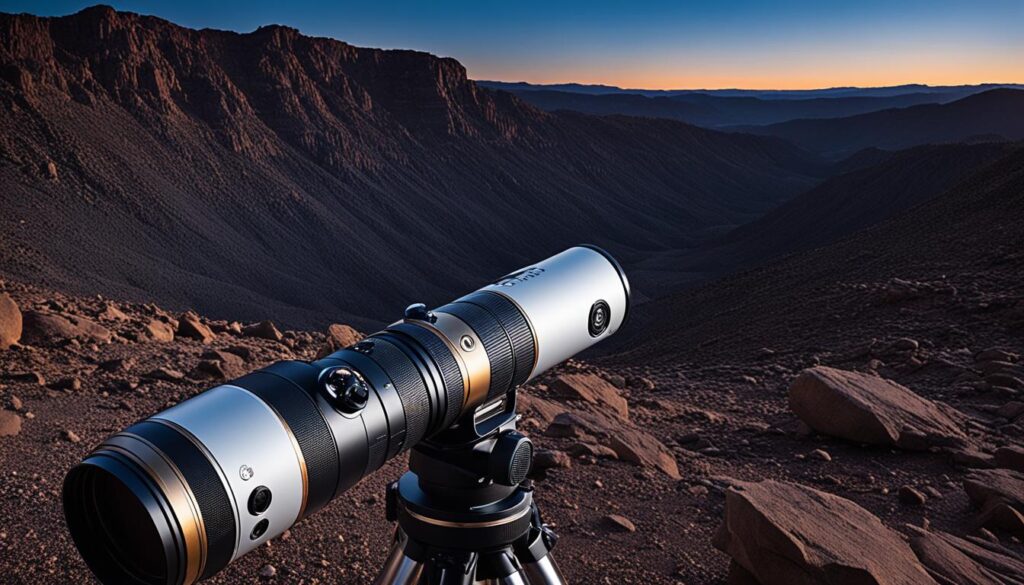
“Planetary imaging cameras are designed to excel at capturing the rapid movements and fine details of celestial objects.”
Accessories for EAA
Electronically Assisted Astronomy (EAA) is more than just a camera. It needs the right accessories and software too. A strong computer is key for controlling the camera, processing images, and showing the live feed.
Software and Computer Requirements
Software like ASISTUDIO, SharpCap, BackyardNIKON, and BackyardEOS offer many tools. They help with capturing, processing, and live stacking images. This way, you can improve your images and use your EAA accessories and computers better.
Focus Aids and Live Stacking
- Focus aids like Bahtinov masks make your EAA images sharper and clearer.
- Live stacking lets you combine many exposures. This creates deep-sky images with more detail and less noise.
With the right software, computers, focus aids, and live stacking methods, you can improve your EAA accessories. This makes capturing stunning celestial images easy.
“The right accessories can make all the difference in your EAA experience.”
Factors to Consider Before Purchasing
When picking an EAA camera for astrophotography or astronomy imaging, think about a few key things. Your budget, the objects you want to see, and your telescope’s size and features matter a lot. These factors help you make the best choice.
Also, make sure the EAA camera works well with your gear, like mounts and accessories. This ensures you get the right EAA camera for your Electronically Assisted Astronomy adventures.
Defining Your Budget
First, think about how much you can spend. EAA cameras vary a lot in price, from affordable to very expensive. Decide on a budget, then look for cameras that match your price and have the features you need.
Identifying Your Imaging Targets
What you want to photograph or see in the sky is also key. For deep-sky objects, you’ll need a camera with a big sensor and high resolution. But for planetary imaging, a camera with a smaller sensor and fast frame rate is better.
Compatibility with Your Telescope
Don’t forget to consider your telescope when choosing an EAA camera. Make sure the camera fits your telescope’s mount and has the right sensor size and resolution. This ensures you get the best view and image quality.

“Selecting the right EAA camera can make all the difference in your astrophotography and astronomy imaging journey. By considering your budget, imaging targets, and telescope compatibility, you can find the perfect camera to take your celestial observations to new heights.”
Conclusion
Thinking about choosing the right camera for Electronically Assisted Astronomy (EAA) shows how deep this topic is. It involves learning about different camera types, their sensor technologies, and what affects image quality. You also have to think about cost and decide between color or monochrome cameras.
This guide has given me a lot of useful insights. I now know more about sensor size, chip characteristics, and what’s needed for capturing deep sky objects and planets. This knowledge has made me see the details of EAA and astrophotography more clearly.
If you’re just starting with EAA or if you’re an experienced astronomer looking to get better gear, I hope this article helped you. It should give you the info and motivation to pick the best camera for you. With the right tools and a love for the night sky, I’m sure you’ll start an amazing journey. This journey will change how you see the cosmos forever.
FAQ
What is Electronically Assisted Astronomy (EAA)?
EAA means using a digital camera with a telescope. You see the images on a screen, not through an eyepiece. This method gives a closer and clearer view of the stars, making astronomy more engaging.
What are the primary sensor technologies used in telescope cameras for EAA?
Two main types of sensors are used: CMOS and CCD. CMOS is popular for being affordable and efficient. CCD is chosen for its deep sensitivity and wide range of colors.
What are the cost considerations for EAA cameras?
EAA cameras come at various prices. Beginners can start with the Rising Tech IMX224 for 5 to 0. For more advanced needs, cameras in the 0 to
FAQ
What is Electronically Assisted Astronomy (EAA)?
EAA means using a digital camera with a telescope. You see the images on a screen, not through an eyepiece. This method gives a closer and clearer view of the stars, making astronomy more engaging.
What are the primary sensor technologies used in telescope cameras for EAA?
Two main types of sensors are used: CMOS and CCD. CMOS is popular for being affordable and efficient. CCD is chosen for its deep sensitivity and wide range of colors.
What are the cost considerations for EAA cameras?
EAA cameras come at various prices. Beginners can start with the Rising Tech IMX224 for $165 to $300. For more advanced needs, cameras in the $500 to $1,500 range offer better quality and resolution.
Should I choose a color or monochrome sensor for my EAA camera?
It depends on what you like and want to see. Color cameras show stars in their natural colors, which is beautiful. Monochrome cameras are better for seeing details in deep space but need more work to add color.
How does the sensor size of an EAA camera impact the field of view and image scale?
The camera’s sensor size affects how wide you can see and the size of objects in your view. Bigger sensors let you see more at once, while smaller ones give you closer views but might miss big objects.
What characteristics are important for deep sky imaging with an EAA camera?
For deep sky imaging, you need a camera that captures lots of light, has low noise, and can handle long shots. On-chip cooling and quiet electronics help too, letting you see fine details in space.
What are the key considerations for choosing a camera for planetary imaging?
For planets, you want a camera with a small, high-resolution sensor. It should be able to take many frames fast, which helps with capturing the quick movements of planets.
What accessories and software are required for successful EAA?
You’ll need a computer to control the camera and process images. Software like ASISTUDIO and SharpCap help with capturing and enhancing your shots. Tools like Bahtinov masks improve focus and live stacking makes images clearer.
,500 range offer better quality and resolution.
Should I choose a color or monochrome sensor for my EAA camera?
It depends on what you like and want to see. Color cameras show stars in their natural colors, which is beautiful. Monochrome cameras are better for seeing details in deep space but need more work to add color.
How does the sensor size of an EAA camera impact the field of view and image scale?
The camera’s sensor size affects how wide you can see and the size of objects in your view. Bigger sensors let you see more at once, while smaller ones give you closer views but might miss big objects.
What characteristics are important for deep sky imaging with an EAA camera?
For deep sky imaging, you need a camera that captures lots of light, has low noise, and can handle long shots. On-chip cooling and quiet electronics help too, letting you see fine details in space.
What are the key considerations for choosing a camera for planetary imaging?
For planets, you want a camera with a small, high-resolution sensor. It should be able to take many frames fast, which helps with capturing the quick movements of planets.
What accessories and software are required for successful EAA?
You’ll need a computer to control the camera and process images. Software like ASISTUDIO and SharpCap help with capturing and enhancing your shots. Tools like Bahtinov masks improve focus and live stacking makes images clearer.
Source Links
- https://www.californiaskys.com/blogs/choosing-a-camera-for-eaa – Choosing a Camera for EAA
- https://theskysearchers.com/viewtopic.php?t=4523 – Best Camera for EAA ?
- https://www.bintel.com.au/eaa-intro/?srsltid=AfmBOoqK0DmgqtGTkLtVl6KxLajaYW75e6bAmvMfdlUm-KfC9OF7jxft – Electronically Assisted Astronomy (EAA) – An Intro – Bintel
0 Comments