
[ad_1]
23/06/2023
6971 views
51 likes
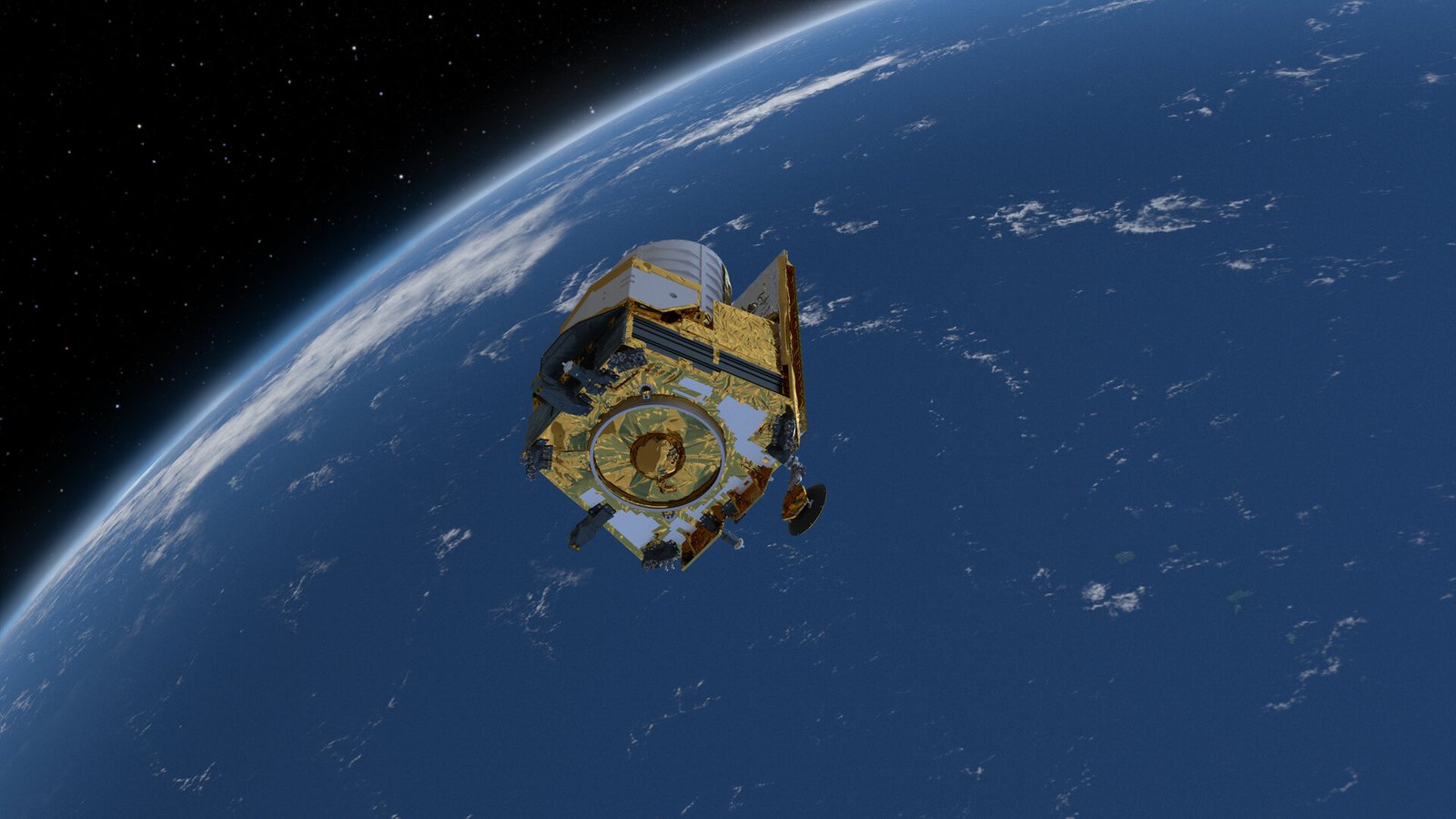
ESA will be broadcasting live as the Euclid space telescope, which will explore the dark Universe, is targeted to launch on a SpaceX Falcon 9 rocket from Cape Canaveral in Florida, USA, at 11:11 local time / 15:11 UTC / 17:11 CEST on Saturday 1 July 2023. A back-up launch date of Sunday 2 July 2023 is foreseen.
Here’s how to follow the launch online.
All times CEST. Times subject to change at short notice
Watch live from 16:30 on 1 July
Tune into ESA Web TV directly or via the ESA Youtube livestream to follow the launch live:
16:30–18:10 Launch programme
Key milestones
On launch day the following key milestones will be included in the launch programme and covered by ESA social media channels.
17:11 Euclid launch on SpaceX Falcon 9
17:53 Separation of Euclid from Falcon 9
17:57 Earliest expected time to acquire Euclid’s signal
Times are specific to launch taking place on 1 July and may vary by a few minutes.
Press release
An ESA press release will be issued upon successful acquisition of Euclid’s signal, at approximately 17:57 CEST.
Join the conversation and #AskESA on social media
Start asking your questions now using #AskESA – yours may be answered during the live launch broadcast!
Follow @ESA_Euclid @esaoperations and @esascience for live Euclid launch coverage, posts can be found using the #ESAEuclid hashtag.
Follow ESA on:
Twitter: @ESA
Instagram: Europeanspaceagency
Facebook: EuropeanSpaceAgency
YouTube: ESA
LinkedIn: European Space Agency – ESA
Pinterest: European Space Agency – ESA
Beyond launch day
After launch, Euclid sets sail for the Sun-Earth Lagrange point L2. Four weeks after launch, Euclid will enter in orbit around this point, which is located at 1.5 million kilometres from Earth, in the opposite direction from the Sun. Once in orbit, mission operators start verifying all the functions of the telescope. During this, residual water is outgassed and subsequently Euclid’s instruments will be turned on. Between one and three months after launch, Euclid will go through several calibrations and scientific performance tests and get ready for science. The telescope begins its early phase of the survey of the Universe three months after launch.
Follow all updates on Euclid’s commissioning on twitter via @ESA_Euclid and on www.esa.int/Euclid.
About Euclid
ESA’s Euclid mission is designed to explore the composition and evolution of the dark Universe. The space telescope will create the largest, most accurate 3D map of the Universe across space and time by observing billions of galaxies out to 10 billion light-years, across more than a third of the sky. Euclid will explore how the Universe has expanded and how and how large-scale structure is distributed across space and time, revealing more about the role of gravity and the nature of dark energy and dark matter.
[ad_2]
Source link
0 Comments